


VIIMASED POSTITUSED
How to Keep Herbs Fresh: Storing Smoking Herbs Without Drying Them Out
To keep dried herbs fresh, store them airtight, dark and cool, in a clean glass or food-safe metal container that fits the amount you have, and open it as rarely and briefly as you can. That is the whole recipe. The details decide whether your herbs stay aromatic and pleasantly supple or turn brittle and flat within weeks. This guide covers the details for herbs you smoke or vaporize: which conditions matter, which containers work, how to spot trouble and how long to expect freshness to last.
TL;DR
- Air, light, heat and moisture swings are what age dried herbs. Control those four and you control freshness.
- Aim for a cool, stable room (roughly 15 to 21 °C), a dark cupboard and an airtight container sized to the amount inside.
- Storage guides commonly cite about 55 to 62% relative humidity in the closed container: below that herbs get brittle, above about 65% mold risk rises.
- Never trim off mold. If you see a fuzzy coating or smell mustiness, discard the lot.
- Buy in amounts you will use within months, and let the smell test tell you when it is time to replace.
Table of Contents
- Why dried herbs lose freshness
- The four conditions that matter
- Choosing the right container
- Prepare herbs before they go in the jar
- Keeping herbs from drying out
- Smells and signs: fresh, dry or damp
- How long do stored herbs stay fresh?
- A weekly routine that works
- Our perspective on storing herbs well
- Set up your storage with Insomnia Smoke
- FAQ
- Sources
Why dried herbs lose freshness
Dried herbs do not usually “go bad” overnight. They fade. Aroma compounds evaporate, oils oxidize and moisture either escapes or creeps back in. The German spice industry association advises against keeping dried herbs for longer than a year, and it names packaging as the decisive factor: airtight, aroma-sealed containers do the job, and the printed best-before date only applies to the unopened pack.
Germany’s federal nutrition centre BZfE frames it the same way, as a quality question. Its advice on herbs and spices is to buy smaller quantities, keep them in airtight, light-proof containers in a cool place, and remember that ground material loses aroma faster because its surface area is larger.
That last point matters for smokers. Herbs you have already ground expose far more surface to air than whole flowers or leaves. If you grind a week’s worth at once, you have started the clock on all of it.
The four conditions that matter
Temperature: cool and steady
Heat speeds up evaporation and chemical breakdown. Storage guides for dried herbs and flowers generally point to a cool, stable room temperature of about 15 to 21 °C. The Deutscher Hanfverband notes that temperatures up to about 20 °C have only a minor effect on shelf life, while warmer conditions accelerate degradation.
In practice that means:
- Skip the shelf above the radiator, the windowsill and the spot next to the stove.
- Avoid the car, a bag left in the sun and any spot that heats up in summer.
- Choose an interior cupboard or drawer where the temperature does not swing between day and night.
The fridge is not the answer either. Condensation forms when you take a cold container into a warm room, and that moisture is exactly what you want to keep out.
Light: store in the dark
Light, UV especially, speeds up aging. The Deutscher Hanfverband states that air and UV light promote the breakdown of THC in cannabis, and the same logic of protecting aromatic compounds applies to any herb. A dark cupboard is the simplest fix. Amber or other opaque containers add a second layer of protection if you want your jar out on a shelf.

Humidity: the middle path
Too dry and herbs turn crumbly, harsh and dusty. Too damp and you invite mold. Guides written for dried flowers and herbs usually land on roughly 55 to 62% relative humidity inside the closed container. A German pharmacy-sector source gives a similar window and explains that above 65% the risk of mold and bacteria rises, while below 55% herbs dry out and lose aroma.

For culinary-style herbs, one German drying guide suggests a stricter limit of under about 60% in the jar. If you are not sure what is inside your container, a small digital hygrometer tells you in seconds, and a two-way humidity pack can hold a steady level once you have it right.
Air: less of it, and less often
Oxygen dulls aroma, and every opening replaces the air in the jar with room air carrying whatever humidity the room has. BZfE points out that rising water vapor can bring moisture into a container, which impairs aroma and promotes clumping or mold. Its example is shaking spices over a steaming pot, but the principle holds anywhere: do not open your jar over a hot drink, in a steamy bathroom or next to a boiling kettle.
Choosing the right container
The container is where most of the work gets done. Look for these qualities:
- Airtight seal. A gasket or a tight screw lid that closes fully, with no residue on the rim.
- Inert material. Glass or food-safe metal. Avoid thin plastic bags for anything longer than a day or two.
- Light protection. Dark glass, an opaque lid or a metal body, or simply a dark cupboard.
- Right size. The less empty space, the less air. German storage guidance also recommends matching the container size to the amount.
- Clean and fully dry. Wash and dry the jar completely before refilling it. Residual moisture is the classic cause of musty stores.
Size deserves a second look. Small amounts dry out faster in big containers because there is so much air to equalize with. And one herb-blend producer notes that a pack used over several weeks loses moisture each time it lies open, which is why closing it properly after every use matters most for bulk packs.
A tidy way to split your supply:
- A main jar that stays sealed and rarely opens.
- A small daily container you refill from the main jar every week or so.
- A pocket-sized carrier for outings, filled only with what you will use that day.
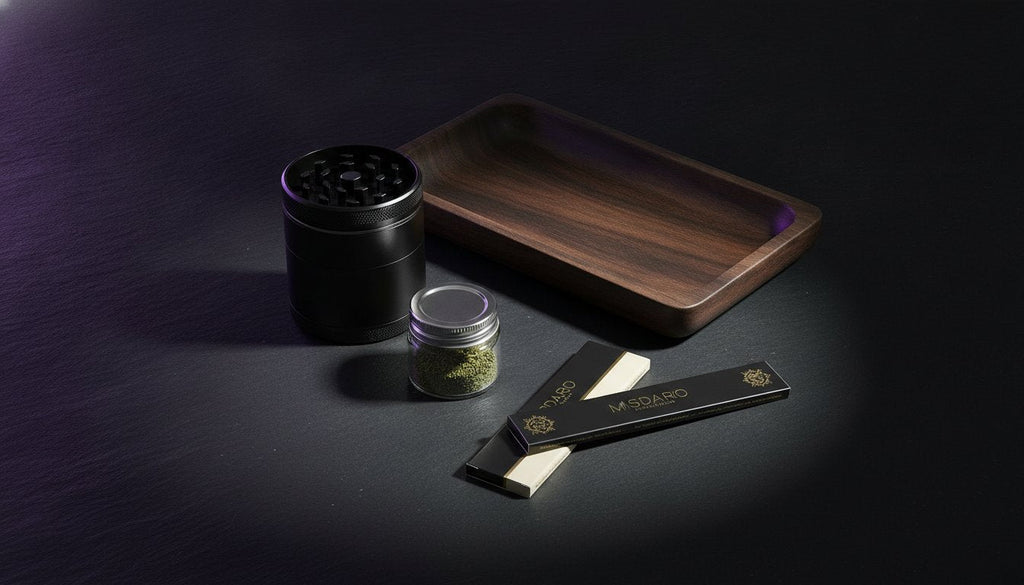
This keeps the bulk of your herbs away from repeated air exchange. A dedicated stash jar works well as the daily container, and our storage products cover larger jars and humidity-minded options for the main supply. For the carry-around portion, a wooden dugout keeps a day’s amount together with a pipe in one compact piece.
Prepare herbs before they go in the jar
Better storage starts with the state of the herbs. If you dried or cured them yourself, check dryness before sealing. A German herb guide gives a simple test: leaves should rustle and crumble easily and stems should snap rather than bend. Storing too early, with moisture still inside, leads to condensation in the jar and is named as the most common cause of mold and musty smells.
A few more habits:
- Keep herbs whole until you need them. Grind per session or per day, not per month. A good herb grinder makes a small fresh grind quick and consistent, so there is no reason to pre-grind a big batch.
- Handle with clean, dry hands and a clean tool. Moisture and oils transfer to the jar.
- Fill the jar to a sensible level rather than leaving it half empty.
- Label the jar with the date you opened it so you can judge age at a glance.
Keeping herbs from drying out
If your herbs are already getting brittle, the cause is usually one of three things: a jar that does not seal well, a container far bigger than the contents, or too many openings. Fix those before reaching for any other trick.
A few practical moves:
- Move the herbs to a smaller, tighter jar.
- Keep the room-temperature rule: heat pulls moisture out faster.
- Add a humidity-regulating pack designed for herbs if you want to hold a set level. Weed.de, a German cannabis information site, names such packs as one way to hold a constant range of 58 to 62% relative humidity.
- Open the jar less. Take a few days’ worth into the daily container and leave the main jar alone.
Do not rehydrate with a wet item such as a slice of fruit or a damp cloth. It adds moisture unevenly and raises the risk of mold, which cannot be reversed.
Smells and signs: fresh, dry or damp
Your nose and eyes are the first test.
| Sign | What it usually means | What to do |
|---|---|---|
| Strong, characteristic aroma, supple but not sticky | Well stored | Keep doing what you are doing |
| Faint or straw-like smell, crumbly, dusty texture | Too dry or too old | Use soon, replace the stock and tighten the storage |
| Slightly damp, clumping, sticky feel | Too much moisture | Check seal and humidity, use the herbs quickly if no mold is present |
| Musty smell, white, grey, green or black fuzz | Mold | Discard everything in the jar |
One German herb guide calls the smell test the best indicator for when to replace: if the herbs only smell like straw, fresh stock is due.
What mold looks like
A German drying guide describes mold on dried herbs as a powdery or fuzzy coating that starts white and thread-like, then turns greenish, grey, brownish or black, often with a musty smell. It also notes that the fungal threads spread inside the material before anything shows on the surface, so dense pieces should be broken open and checked.

The Federal Institute for Risk Assessment (BfR) is clear on the response: moldy food should be discarded immediately and not eaten, because mold can produce harmful mycotoxins, and the visible patch is only part of it. Cutting off the affected spot is not enough. That advice is about food, but it is the sensible rule for anything you will inhale, too. When in doubt, throw it out. If you have a respiratory condition or a weakened immune system and are unsure about a batch, ask your doctor or pharmacist before using it.
How long do stored herbs stay fresh?
There is no single number, because it depends on the herb and the conditions. Some reference points:
- The German spice industry association says dried herbs should not be kept longer than one year. Whole, unground spices such as peppercorns or cinnamon sticks last much longer than leafy herbs.
- A German herb storage guide puts typical shelf life at 6 to 12 months: herbs lose aroma rather than spoil outright.
- A pharmacy-focused source says well-stored flowers with humidity control and a UV-protective container keep their aroma for 6 to 12 months, while poorly stored ones show clear losses in taste after 3 to 6 months.
The practical conclusion is simple. Buy amounts you will use within a few months, rotate old stock first and treat the aroma as your expiry date.
A weekly routine that works
- Keep your main supply in one sealed, dark jar in an interior cupboard.
- Once a week, open it briefly, away from steam, and move a few days’ worth into a small daily container.
- Grind only what you will use in the session.
- Wipe the rim, seal both containers and put them back.
- Glance at the aroma and texture every time. Note the date on the jar.
- Every few months, check the humidity level if you use a hygrometer, and replace any humidity pack according to its instructions.
The odor side matters as well. Sealed jars already keep smells in, and our smoke odor control range helps with the rest of your space.
Our perspective on storing herbs well
We have been curating smoking and vaping accessories since 2018, and the most common problem we hear about is not the pipe or the vaporizer. It is herbs that have gone dry, dull and harsh because they lived in a bag, a loose tin or a jar twice too big.
Our view is that storage is part of the setup, not an afterthought. The right container is airtight, opaque or kept in the dark, easy to open one-handed and small enough that you are not storing more air than herb. That is why we stock jars, dugouts, grinders and odor-control products from established American, Canadian and European brands side by side: they work as a system, with a main jar, a daily container and a grinder you use per session.
If you vape dry herbs, fresh, supple material also changes how a session feels, so a good storage habit pays off with a device like a portable dry herb vaporizer too. Our team is happy to help you pick a combination that suits your routine, whether you are just starting out or already know exactly what you want.
Insomnia
Set up your storage with Insomnia Smoke
If you want to put this into practice in one order, we carry the pieces in one place: jars and storage products for your main supply, dugouts and one hitters for your daily amount, herb grinders for fresh grinds and rolling products to round out your kit. We ship discreetly, including EU and UK delivery.

Browse the full range on insomniasmoke.com and check each product page for current availability and offers. If you prefer a vaporizer, the vaporizers, accessories and parts collection includes dry herb devices such as the Storz & Bickel Crafty+.
FAQ
Should I keep dried herbs in the fridge or freezer?
No, for dried herbs a cool cupboard is better. Taking a cold container into a warmer room causes condensation, and that moisture promotes clumping and mold. One herb producer also advises against refrigerating dried blends for this reason. Keep them dark, dry and tightly closed instead.
What is the best container for smoking herbs?
A clean, fully dry glass jar with a tight seal is a reliable choice, ideally dark or kept in a dark place. Food-safe metal containers also work. Choose a size that matches the amount you have so there is little air inside, and keep a smaller daily container so the main jar opens rarely.
Can I rescue herbs that have become too dry?
You can stop further drying by moving them to a smaller, tighter jar and keeping them cool and dark. Adding something wet directly is risky because it raises the chance of mold. Very dry, straw-smelling herbs have mostly lost their aroma, so the better fix is fresh stock and better storage from then on.
How can I tell whether herbs have mold?
Look for a white, grey, green or black powdery or fuzzy coating and a musty smell. Mold threads can sit inside the material before they are visible. The BfR advises that moldy food should be discarded rather than trimmed, so throw out the whole jar if you suspect it.
How long will stored herbs stay fresh?
Most dried herbs hold their aroma for about 6 to 12 months when stored well, and the spice industry recommends no more than a year for dried herbs. Whole, unground items last longer than ground ones. Buy amounts you will use soon and replace stock when the smell fades.
Sources
- BZfE: Gewürze und Kräuter sicher genießen
- BfR: Schimmelpilze in Lebensmitteln
- Fachverband der Gewürzindustrie: Haltbarkeit und Aufbewahrung
- Deutscher Hanfverband: Lagerung und THC-Abbau
- Cannapot: Cannabis richtig lagern
- Weed.de: Cannabis Aufbewahrung
- WEECO Pharma: Cannabis in der Apotheke richtig lagern
- Cannalisa: Die richtige Lagerung von medizinischem Cannabis
- GrowCologne: Schimmel und Fehlgeruch
- Kräuterleben: Kräuter trocknen und lagern
- Ritual Herbs: How to Store Herbal Blends

